SAIL sharpens strategic priorities for FY27, reinforces market position, sustainability amid global volatility
The company remains committed to its volume expansion plans that are aligned with the central government’s vision of Viksit Bharat@2047.
The SAIL Board approved the current VRS for employees with 15 years or more of service and who are aged 54 years or above.




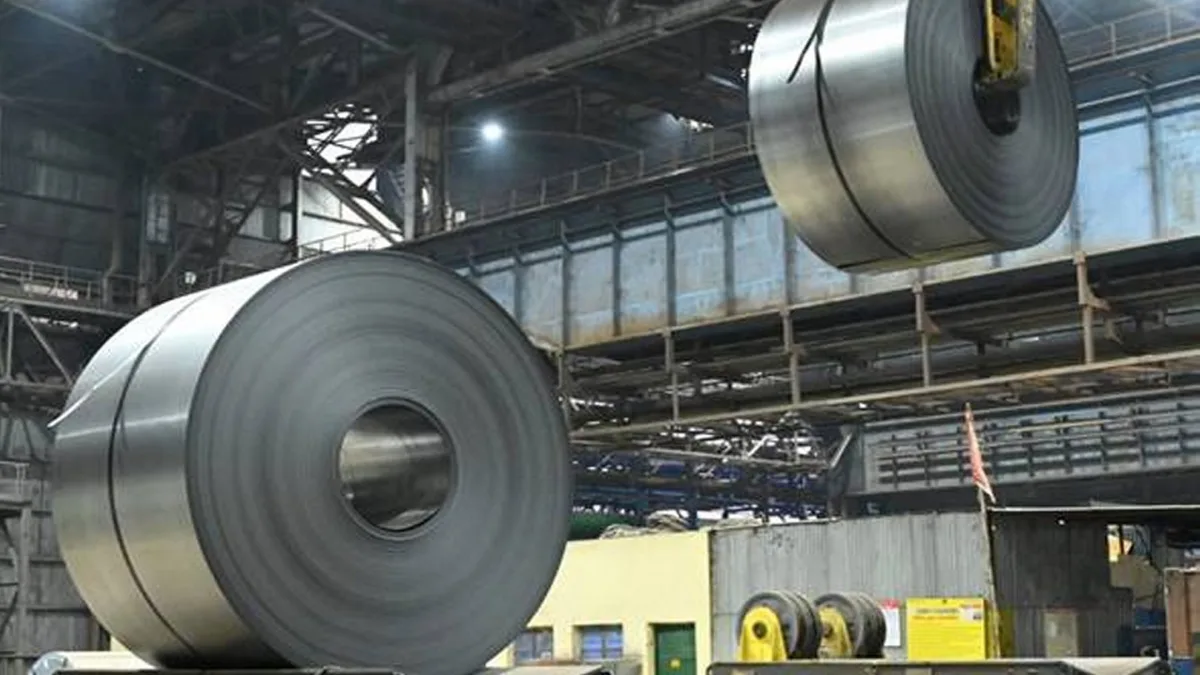
Photo: Ministry of Steel
The ‘Gujarat formula’ worked well in this year’s Steel Authority of India (SAIL) bid to rationalise manpower, compared to the Voluntary Retirement Scheme (VRS) started by the national steel major ten years ago.
Almost 750 employees from five SAIL plants opted for VRS this year. In 2016, 1,038 out of the total workforce of 93,000 SAIL employees had opted for VRS, which led to a financial outflow of Rs 213 crore against a projected annual saving of Rs 103.80 crore.
Advertisement
In 2001, however, the figure of manpower reduction was 6,510. Between 1998 and 2020, almost 41,000 SAIL employees took VRS from the steel major in various phases.
Advertisement
This year’s figure of around 750, against SAIL’s current workforce of 49,792, reflects a reasonably higher percentage of manpower reduction, leading to success of the Gujarat formula.
SAIL, as part of its manpower rationalisation initiative aimed at optimising labour cost utilisation, floated the VRS this year.
This led to a reduction of at least 1,000 employees across its plants at Durgapur, Bokaro, Bhilai and Rourkela. The scheme came into effect on 20 May, with the application window closing on 20 July.
The ‘Gujarat formula’ for VRS provides a compensation package designed to offer an “attractive yet capped” payout for employees in state-owned enterprises. This is calculated as 35 days’ salary for each completed year of service plus 25 days’ salary for each year of the remaining service.
The SAIL Board approved the current VRS for employees with 15 years or more of service and who are aged 54 years or above.
“This year’s response was significantly higher than that in 2016,” top office-bearers of the Steel Executives Federation of India (SEFI) and the Steel Workers Federation of India (SWFI) said.
“We have opposed any such move to reduce manpower. Still, it is a fact that this year’s response was higher than what we had apprehended. The plants are already suffering from perennial manpower shortages, yet the authorities are floating VRS to overcome financial stress,” Lalit Mishra, General Secretary of the CITU-affiliated Steel Workers’ Federation of India (SWFI) said.
Top SAIL officials said the figure stood at 627 by the first half of 20 July and had almost reached 750 by the close of the scheme. The final estimate, however, was still being compiled.
Sanjay Arya, General Secretary of the Steel Executives Federation of India, said, “SAIL’s manpower remains higher than that of private players because of the nature of its integrated operations, welfare commitments, and the legacy of its manpower structure, resulting in traditionally higher manpower costs than many private steel makers. Rationalisation of its mammoth workforce was therefore considered necessary, and the scheme was introduced.”
The scheme was popularly known as the ‘Gujarat formula’ because it was first conceptualised and implemented in Gujarat’s state-owned public sector undertakings, such as Indian Petrochemicals Corporation Limited (IPCL) and Gujarat State Petroleum Corporation (GSPC), during 2000–01.
It was later broadly accepted by the Centre and adopted for the large-scale VRS rollout involving around 93,000 employees of BSNL and MTNL.
SAIL, however, received a lukewarm response from its Bengal units, including Durgapur Steel Plant (DSP) and Alloy Steels Plant (ASP), in this year’s VRS. Barely 11 employees from ASP and 51 from DSP opted for the scheme.
“Prior to this VRS, DSP had around 5,500 workers and 1,100 executives,” said Bedbandhu Roy, Chief of Communications, DSP.
SAIL’s Rourkela Steel Plant, meanwhile, recorded the highest response among its major units, with 268 employees and executives opting for VRS and leaving the PSU steel maker.
Advertisement